Unbearably long wait for justice leaves South African families in limbo
Written by BBC on January 6, 2026
Jason Pretorius has been waiting for his mother’s alleged killer to go on trial in South Africa for more than two years, living a life in limbo and hoping to get some closure after her death.
The problem is that the country’s legal system is jammed up and there are tens of thousands of other cases waiting to be heard.
The courts are overwhelmed, with backlogs now so severe that some accused are being given trial dates as far away as four years, violating the principle that justice delayed is justice denied.
Some observers argue that this chips away at faith in the legal system, especially worrying for a country affected by some of the highest crime rates in the world.
Jason, 27, knows the pain of court delays all too well – and says each postponement feels like losing his mother, Charlene, all over again.
With his warm voice betrayed by the sadness on his face, he tells the BBC: “She was my best friend. Everyone who knew her loved her. She was always trying to make the people in her life happy. That’s how I remember her, as someone kind and loving.”
Charlene was 43 and enjoying life as a new grandmother when she was killed in May 2023. She was set alight in her car in what police allege was an act of gender-based violence. She later died in hospital from her injuries.
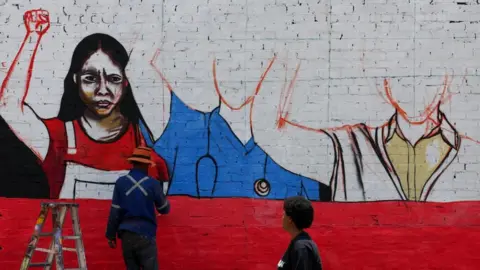
South Africa’s government declared gender-based violence and femicide a national crisis in 2019
The man accused of killing Charlene has been in custody for two years. But there has been no trial – court records show a series of postponements, for reasons ranging from missing reports and incomplete investigations to unavailable judges and administrative delays.
Jason, who works as a call centre manager, says the impact has been both emotional and financial.
“I’m the provider now, not only for my wife and baby, but also for my younger sister and grandmother because my mother used to help them out as well.”
He is desperate for the case to conclude.
“No healing can be done without putting something to rest. We don’t know what’s going to happen, and I’m too scared to even think about it. We need clarity. We need to know what happened.”
The office of the auditor-general, a watchdog set up under South Africa’s constitution, recently reported a waiting list of around 37,000 cases, but the justice department has said that the true figure could be closer to 100,000.
One of the main causes of the delays is staffing.
South Africa has an estimated 250 judges serving a population of more than 60 million, amounting to around four judges per million people and well below global norms.
By comparison, Judges Matter, a South African advocacy group, says India has around 15 judges per million people, while many European countries have more than 200. The figures highlight just how thinly stretched South Africa’s judiciary has become.
One of the most high-profile examples of prolonged delays is the murder case of Senzo Meyiwa – a beloved footballer who captained the national team, Bafana Bafana, and played for one of the country’s most popular clubs, Orlando Pirates, in the local league.

Senzo Meyiwa’s killing sent shockwaves across South Africa
In 2014, Meyiwa was shot and killed at the home of his girlfriend, musician Kelly Khumalo, in Vosloorus, south of Johannesburg.
At the time, police said the motive appeared to be a burglary gone wrong.
The murder dominated headlines, extensive state resources were allocated to crack the case, and police offered a reward of around $23,000 (£17,300) for information leading to the arrest of his killer.
But more than a decade later, the case has still not been closed.
The trial at the Pretoria High Court has been beset by challenges, including changes in judges and legal teams, and allegations that police botched the investigation.
More recently, the head of the public prosecutor’s office, Advocate Shamila Bahoti, said factionalism and infighting within the police had affected how the case was investigated over the years.
Senior government officials acknowledge the problem but say reforms are coming.
Lucky Mohalaba, the head of court administration, says the government accepts criticism that more needs to be done to ensure speedy trials, and plans to hire more magistrates, and possibly extend working hours, to tackle the problem.
“We do acknowledge that some matters could have been processed much quicker. We urge the public to not lose faith and hope in the justice system,” Mohalaba tells the BBC.
But organisations such as Action Society, which support victims through the legal process, say the justice system is failing people.
“The system is broken at every step, and sometimes the delays force people to give up. That’s especially dangerous in a country like South Africa with a 90% re-offender rate. It becomes a vicious cycle,” the group’s spokesperson, Juanita du Preez, tells the BBC.
“Every single person we assist has lost faith in the criminal justice system, the police and the government, because they are living that failure every day,” she adds.