Uganda denies plans to block internet during election
Written by BBC on January 6, 2026
Uganda’s authorities have denied reports that they are planning to cut access to the internet during next week’s election.
The main opposition candidate last week repeated claims that the government was going to block the internet to prevent his supporters from mobilising, and sharing election results.
On Friday, satellite internet provider Starlink restricted its services in Uganda following an order from the communications regulator, fuelling these concerns.
President Yoweri Museveni is seeking to extend his 40-year rule in the 15 January elections. His strongest challenger is expected to be Robert Kyagulanyi, popularly known as Bobi Wine, a former pop star.
This is a repeat of the 2021 poll, which saw widespread protests with dozens killed, while the internet was cut for four days.
Meanwhile, the government has banned live broadcasts of riots, “unlawful processions” and other violent incidents ahead of the election, arguing that these could “escalate tensions and spread panic”.
However, the head of the Uganda Communications Commission (UCC) said reports of a possible internet blackout were “mere rumours,” insisting that the commission’s role was to guarantee uninterrupted connectivity nationwide.
“As of now, there is no resolution to switch off the internet,” UCC Executive Director Nyombi Thembo told Kampala-based Capital FM.
This point was also made by Amina Zawedde, the most senior official at the Ministry of Communications and National Guidance.
“Government has not announced, directed, or implemented any decision to shut down the internet during the election period,” she said, describing the reports as false, misleading and liable to create fear.
She further cautioned against the spread of false or inflammatory content.
“Digital platforms are not exempt from the law,” Zawedde said, adding that the Computer Misuse Act applied fully to online conduct, including the spread of false information and offensive communication.
She also stressed that only the Electoral Commission had the mandate to declare results, and broadcasting unverified or premature results was illegal.
“Freedom of expression must be exercised responsibly and within the framework of the law,” she added.
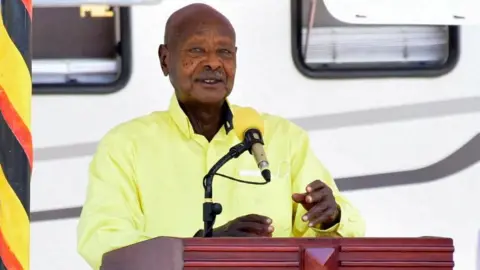
Museveni is seeking a seventh term in offic
Despite the assurances, the main opposition party, the National Unity Platform (NUP), has launched an offline vote-monitoring app in case of a blackout. The app, called Bitchart, was unveiled by NUP leader Bobi Wine.
He said the app used Bluetooth technology to share images of the results forms from polling stations and voting data without internet access.
“As we all know, the regime is plotting an internet shutdown, as they have done in past elections, to block communication and prevent citizens from organising, verifying results, and demanding accountability,” he said in his New Year’s address.
Amid growing political tensions, Amnesty International has accused Ugandan security forces of using torture and arbitrary arrests to intimidate opposition supporters. The group says it has evidence of beatings and tear gas attacks on backers of Bobi Wine’s National Unity Platform. The BBC has requested a response.
Museveni first came to power in 1986 when his rebel forces marched into the capital, Kampala. He has since been elected six times amid opposition allegations of fraud and intimidation, which the government has denied.